
With Ms. Erika Gascho, EMMS Principal
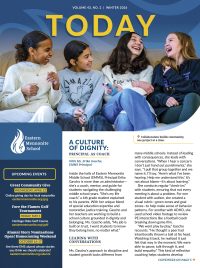
Inside the halls of Eastern Mennonite Middle School (EMMS), Principal Erika Gascho is more than an administrator— she’s a coach, mentor, and guide for students navigating the challenging middle school years. “She’s my life coach,” a 6th grade student explained to his parents. With her unique blend of special education expertise and restorative justice training, Gascho and her teachers are working to build a school culture grounded in dignity and belonging. Ms. Gascho adds, “My job is built on trust, I want students to know they belong here, no matter what.”
LEADING WITH CONVERSATIONS
Ms. Gascho’s approach to discipline and student growth looks different from many middle schools. Instead of leading with consequences, she leads with conversations. “When I hear a concern I don’t just hand out punishments,” she says. “I pull that group together and we name it. I’ll say, ‘Here’s what I’ve been hearing. Help me understand this.’ It’s not about blame—it’s about learning.”
She conducts regular “check-ins” with students, ensuring that not every meeting is about a problem. For one student with autism, she created a visual rubric—green zones and goal zones—to help make sense of behavior patterns. For another with ADHD, she used school video footage to review PE interactions like a football coach breaking down game film.
“We went play by play,” Gascho recounts. “He thought a peer had intentionally thrown a ball at his head. Watching it back, he realized it just felt that way in the moment. We were able to pause, talk through it, and build empathy.” This kind of reflective coaching helps students develop the self-awareness they need to succeed socially and academically.
But it doesn’t end there, structured conversations where every voice is heard, known as Circles, are a cornerstone of Gascho’s leadership. When a sixth- period class spiraled out of control, Gascho took over for a full period to lead five restorative circles (with the teacher’s permission). “By the end of those circles, the whole class felt different,” she says. “They said, ‘We were heard.’ And that changed how the class worked together.” Follow-up circles reminded students of the agreements they made and reinforced the positive changes they had put in place. “It’s textbook restorative justice, and it works,” Gascho notes.
WIRING FOR EMPATHY, PERSPECTIVE-TAKING, AND LEADERSHIP
At EMMS, this focus on dignity and commitment to belonging has yielded a thriving culture. Students feel safe to take risks and learn from mistakes, and teachers are empowered to partner in the restorative process. “We believe in these students,” Gascho emphasizes. “Middle schoolers are going to push boundaries. Our job is to guide them, with the belief that every single one belongs here.”