
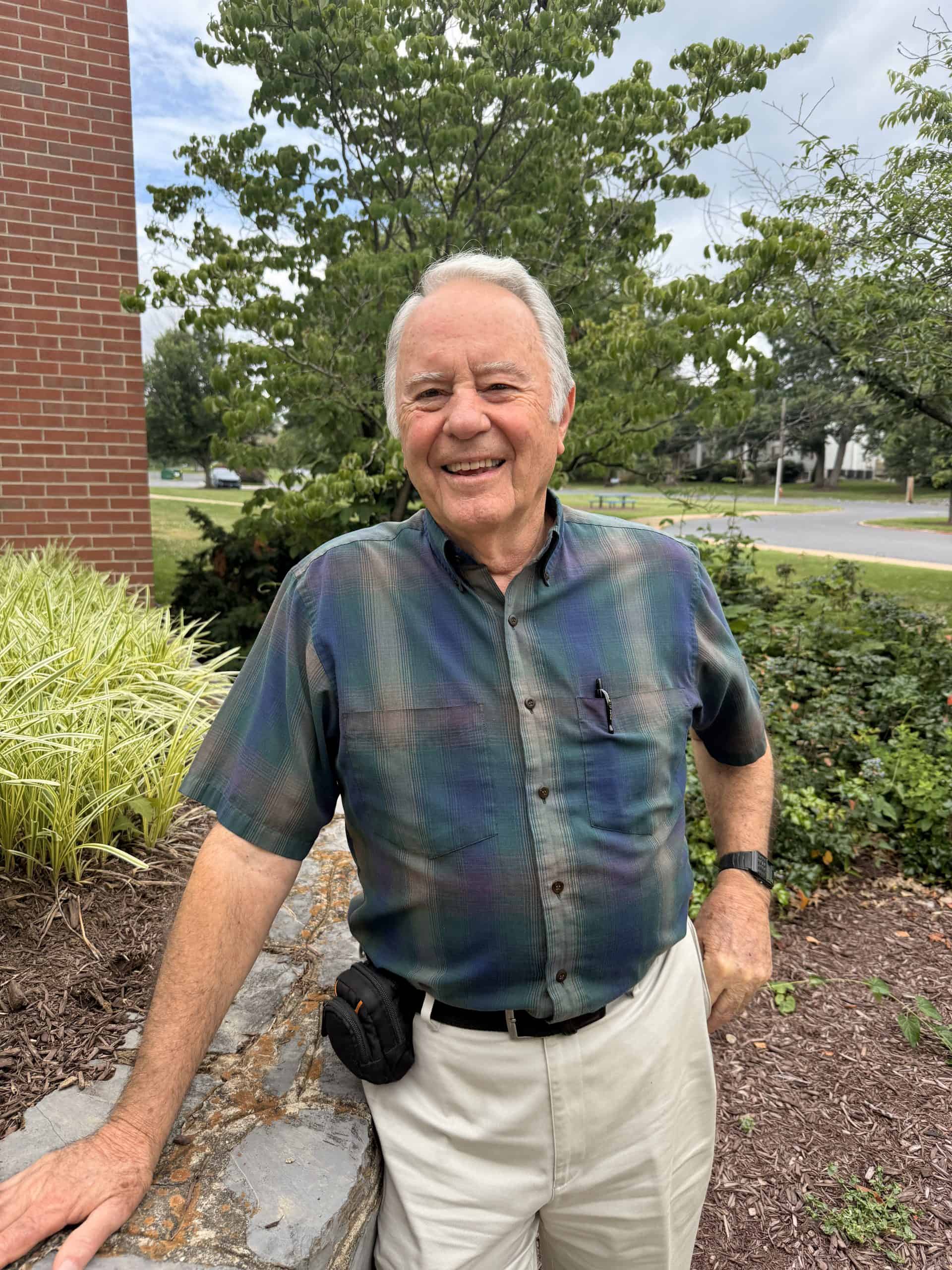
Alumni Stories: Dr. Sam Showalter ’61
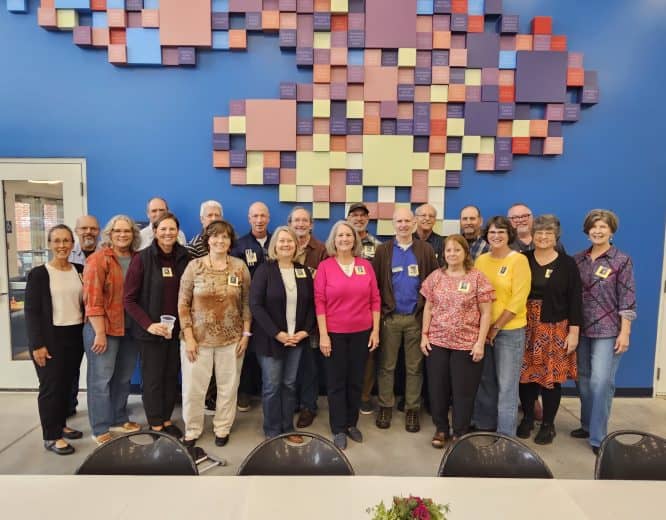
We celebrate alumni stories to hear each others’ journeys since high school and to be inspired through lives of service, professional contributions, embodiment of the love of Jesus, and community engagement. Nominations are accepted in the spring of each year and reviewed by the selection committee of the EMS Alumni Board. The EMS learning community and alumni celebrate the stories over fall Homecoming. Learn more.
Abigail Cook, Communications Specialist recently sat down with Dr. Sam Showalter ’61 for an interview in view of the celebration of his journey since high school. Look for a longer version of this article in the fall issue of TODAY magazine.
Q: 65th class reunion this year! What a moment to celebrate! What years did you attend EMHS, and what brought you there?
A: I attended EMHS from 9th through 12th grade. My parents encouraged me, and I was very happy to come. There were things I couldn’t do—or didn’t feel comfortable doing—in public school that I felt free to do at EMHS. I could take part in anything: athletics, mostly music, and some sports like basketball.
Q: Were there any standout moments or experiences at EMHS?
A: I enjoyed science—especially biology—and music. Ms. Audrey B. Shank, my music teacher, let me be an assistant conductor of a high school chorus. I also sang with the boys’ octet for two years, and we traveled over spring holidays to perform. Dorothy Kemrer, who taught Latin, made a big impact, too. About a dozen of us took Latin I and II and became lifelong friends—we called ourselves the “Latin kids.” Friends like Stanley Yoder, Norman Shank, Donald Pellman, Alan Stoltzfus and Harry King have been important in my life. My girlfriend, Jan, and I met in high school. Her grandmother told her to check out “this nice young guy” from Broadway. We were 14 and have been together ever since. I like to say she chased me until I caught her! She became a nurse, so then I had to become a doctor—we joked that the nurse and the doctor fell in love.
Q: How did you decide to become a doctor?
A: In 5th grade, a teacher sparked my love of science, and I knew I wanted to be some kind of scientist. Once I got to EMHS, that interest deepened. Medicine became my focus partly because of Jan—I joke about that, but there’s truth to it. I wanted to learn about the human body and about people.
Q: You had a very long medical career. How long did you practice?
A: I graduated from the Medical College of Virginia (in Virginia Commonwealth University) as part of the first VCU class and got my license in 1969. I practiced actively for 50+ years until 2020 and still keep my medical license. I occasionally do some work in joint clinics in Richmond or Virginia Beach.
Q: Sustaining such a long career takes grit. What helped you endure?
A: During the Vietnam era, I chose conscientious objector service. After medical school, Jan and I spent six years in Wise County, Virginia, working in an Appalachian Regional Hospital. It counted as alternate service and also helped us financially—my scholarships required rural service. Those years taught me resilience. I even served as president of our medical group, negotiating a nurses’ strike with the Chicago Steel Workers and handling some tough situations—including threats on my life from an unhappy patient. But I also helped a lot of coal miners secure black lung benefits, which was deeply rewarding and much appreciated.
Q: Was your conscientious objection based on faith?
A: Yes. I had personal anti-war convictions and based them on my Mennonite faith. I went to church three times a week as a teen at Morning View Mennonite in Singers Glen. Faith and community guided my choices.
Q: What were some of the biggest surprises of your medical career?
A: One of the biggest changes was in how I approached substance abuse treatment,, especially alcohol and tobacco. Early in my career, I didn’t like seeing alcoholics—they never followed my advice. But later, I spent ten years working part-time in an alcohol treatment center, admitting about 1,000 patients. I learned how successful treatment could be and how lives could be completely transformed. One memorable story was a patient I met for a routine work physical. I gave him my 10-minute talk on alcoholism. He didn’t say much, but two years later he returned just to say thank you—he had quit drinking that day, rebuilt his life, and wanted me to know his gratitude. Stories like that gave me immense joy.
Q: Where have you found places to belong, thrive, and live God’s will?
A: I’ve found that in church communities, small groups, and Sunday school classes. At Harrisonburg Mennonite, we have a vibrant group of 80- and 90-year-olds who support each other through life’s challenges.
Q: What words of hope or advice do you have for EMHS today?
A: I’m happy with what I see. My grandchildren attend EMHS, and I love celebrating their successes in sports, music and performance. My hope is that the school continues to provide a strong Christian education and helps students navigate today’s challenges to faith, life, and friendship. EMHS was a wonderful place to build lifelong friendships—I hope that remains true for generations to come.
Thank you, Sam!
We look forward to hosting him this fall during Homecoming!
Register now for Homecoming 2026: October 16 and 17.
 English
  Español de México
I very much enjoyed the interview with Sam and share his story. It was an all around profound experience spiritually, socially, emotionally and last a good basic education. My home was 600 miles away in Indiana and was only able to attend the last two years graduating in 1953. This is definitely a serious consideration for all youth. I am supporting EMS in every way possible.