The Parable of the Yaupon Plant: Finding God in the Unexpected
Plant and Harvest Communi-TEA – Pastor Emily Nyce
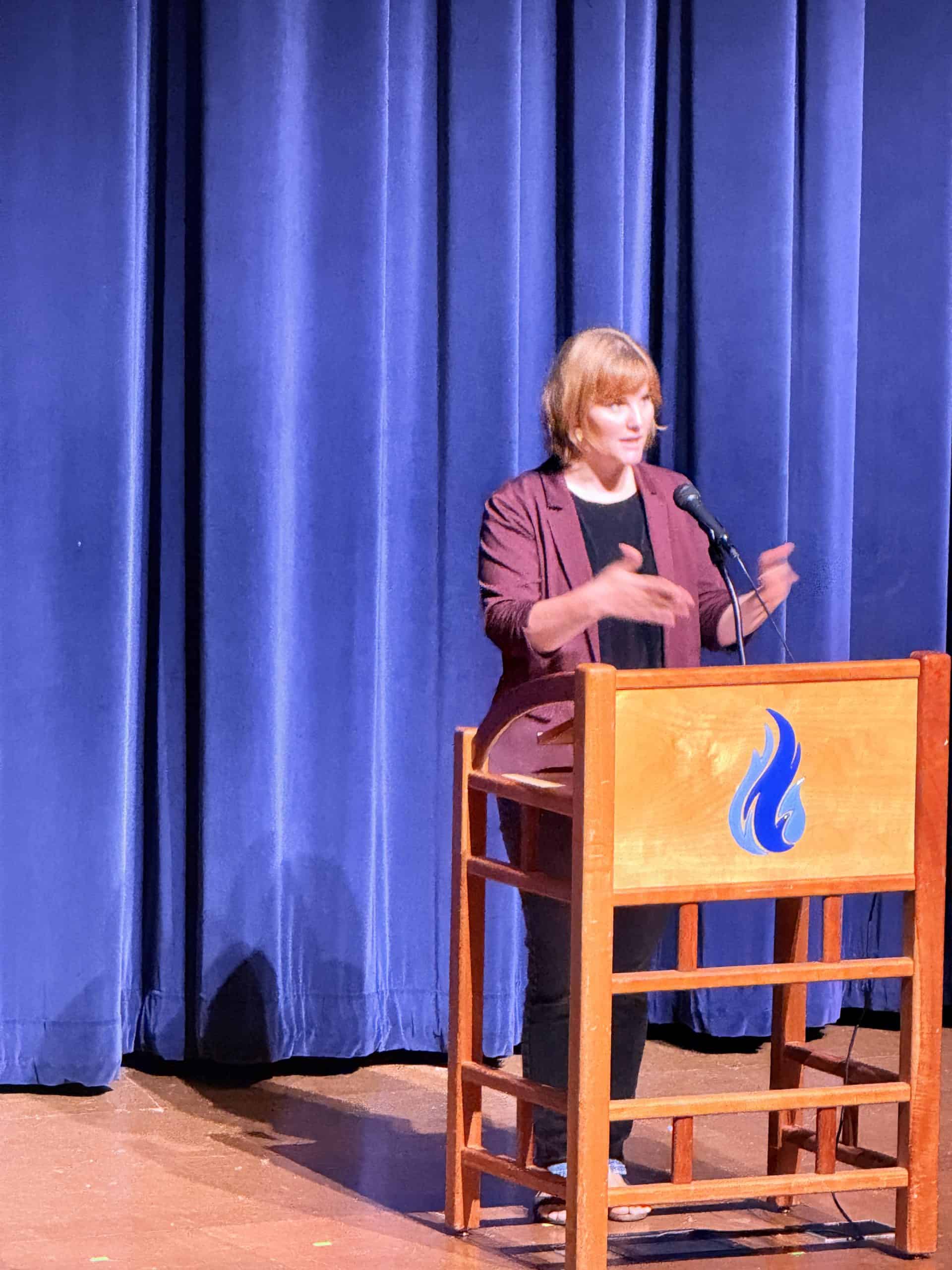
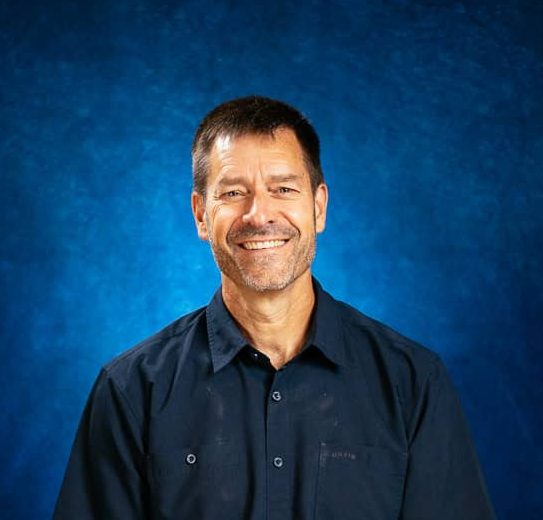
“Hi, full circle,” Emily Nyce greeted the EMS chapel audience with a smile. “I am wife to Travis Nyce, your new admissions counselor and Girls Varsity Basketball coach, and I was Simon and Nina’s nanny for a summer, as Simon mentioned; it’s good to be with you all.”
Emily Nyce, pastor of Faith Formation and Outreach at Community Mennonite Church, recently spoke at Chapel on one of her favorite parables of Jesus. She gave the well-known Parable of the Mustard Seed a surprising twist—she called it the Parable of the Yaupon Plant.
“You’ve probably heard the parable before,” she said, referencing Matthew 13:31–32. “‘The kingdom of heaven is like a mustard seed, which a man took and planted in his field. Though it is the smallest of all seeds, yet when it grows, it is the largest of garden plants and becomes a tree, so that the birds come and perch in its branches.’”
Emily explained that Jesus’s original audience would have immediately recognized the imagery. “Mustard wasn’t a mighty cedar. It was a small, scrappy, medicinal shrub that grew in backyards—accessible, healing, and hospitable to God’s creation.”
She drew a contrast to the ancient text of Ezekiel. “In Ezekiel and throughout the Ancient Near East, cedar trees represented power. Nations boasted about their gods like cedar trees—tall, impressive, untouchable. But Jesus flips it. He’s saying God’s kingdom isn’t like a mighty cedar. It’s like their local Palestinian mustard—ordinary, healing, and available to everyone.”
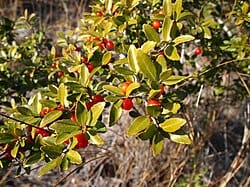
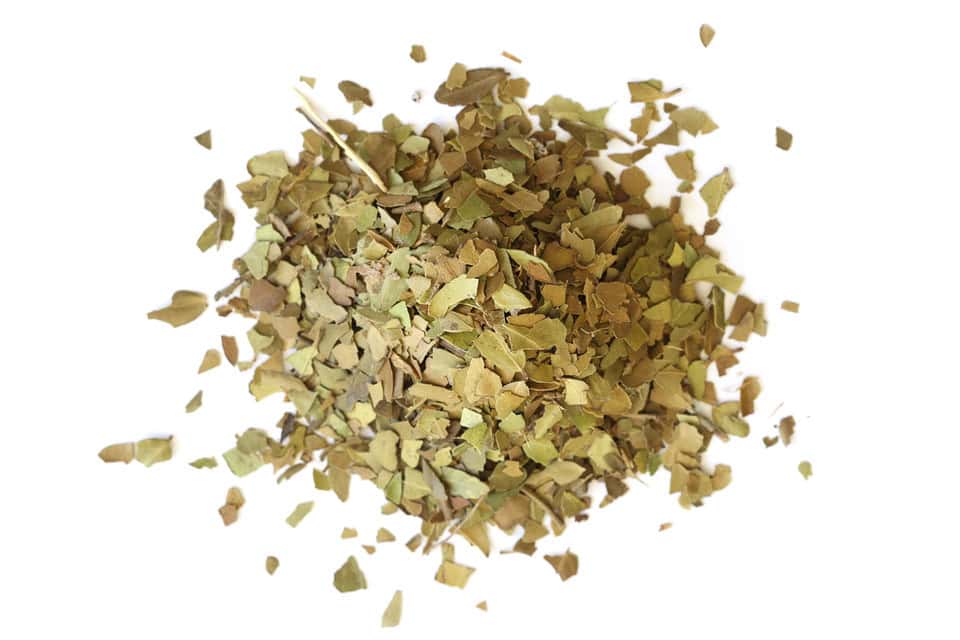
Fast forward 2,000 years, and Emily found herself in seminary in Richmond, Virginia. Her seminary owned a small park—a green space at risk of being sold. “I met someone in Richmond who cultivated Yaupon,” she recalled. “Yaupon is the only native caffeinated tea plant in the Americas. It’s so similar to mustard: resilient, medicinal, and, it grows scrappy, bushy, and low to the ground. Birds make nests in it. It heals. It’s abundant. It’s right in our own backyards.”
The connection was instant. “I thought, if Jesus was walking around Virginia, he’d probably call it the Parable of the Yaupon Plant,” Emily said. “Because Yaupon, like mustard, invites us to imagine God’s kingdom as local, hospitable, and healing.”
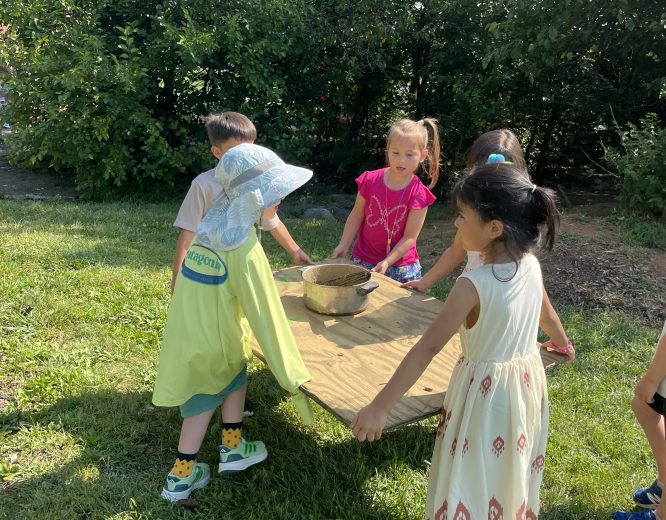
Emily shared how she and her allies rallied to preserve the seminary park. “We planted Yaupon together. We hosted kids’ camps, art projects,non-profit partnerships, academic integration with seminary classes, and community events. We applied for grants—some we got, some we didn’t. It was grassroots, scrappy, sometimes heartbreaking, and completely Spirit-led. In the end, we saved the land. We named it Yaupon Place.”
Her takeaway was clear: “God does not call us to be like mighty cedars—impressive, untouchable, or set apart. God calls us to be like mustard and yaupon: local, accessible, wild, and healing. Communities where birds can nest and people can thrive.”
The story of Yaupon Place is a living parable—a reminder that the kingdom of God grows in ordinary, overlooked places, right in our backyards.
“Mustard and yaupon,” Emily concluded, “this is how the good news grows.”
Watch the full chapel with Simon Dula’s introduction.


 English
  Español de México